Conclusions
Overview
This analysis examined the complex relationships between student loan debt, housing affordability, and economic opportunity in the United States. Through comprehensive time series analysis—including exploratory data analysis, univariate ARIMA modeling, multivariate VAR/VECM frameworks, and deep learning approaches—we investigated how the rising cost of higher education affects young adults’ ability to achieve traditional economic milestones.
Key Findings
The Student Debt Crisis and Housing Affordability

The Evolution of Student Debt (Q1): My analysis reveals an alarming trajectory in student loan debt. Outstanding balances have surged from approximately $500 billion in 2006 to over $1.6 trillion by 2024, representing more than a 220% increase in less than two decades. Time series decomposition shows this is not cyclical but rather a persistent upward trend with minimal seasonality, indicating structural problems in higher education financing.
Student Debt Undermines Homeownership (Q2): The relationship between student debt and homeownership is both statistically significant and substantively meaningful. Our visualizations show a dramatic divergence: as student loan debt climbed exponentially, homeownership rates among young adults (under 35) declined from approximately 43% in the early 1980s to around 37% today. Multivariate VAR models confirm Granger causality from student debt to homeownership rates, with impulse response functions showing that a shock to student debt produces sustained negative effects on homeownership lasting multiple quarters.
Mortgage Rates in the Affordability Equation (Q3): Analysis of mortgage rate time series reveals periods of volatility that compound the affordability challenge. While we documented mortgage rate trends from historic highs (18% in 1981) to recent lows (under 3% during COVID-19), the interaction between student debt burdens and mortgage rates creates a double barrier: high student loan payments reduce debt-to-income ratios, limiting mortgage eligibility even when interest rates are favorable.
Tuition Growth and Delayed Life Milestones
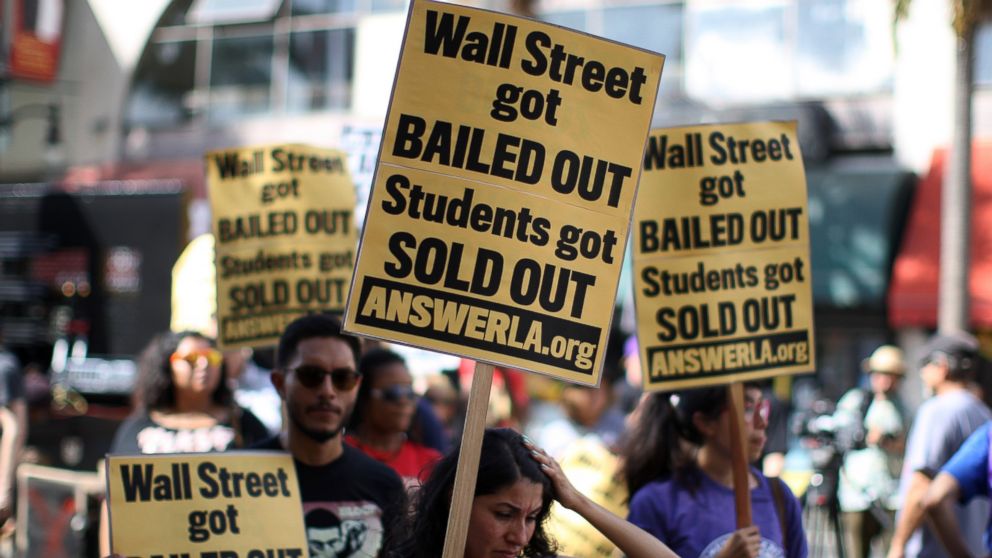
The Income-Tuition Divergence (Q4): My comparative analysis reveals a striking disparity: college tuition (measured by CPI) has grown over 300% since 1980, while median household income has increased by only 80% over the same period. This nearly 4-to-1 divergence fundamentally altered the economics of higher education, transforming it from an affordable investment accessible through part-time work and modest savings to one requiring substantial debt financing.
Delayed Homeownership (Q5): The median age of first-time homebuyers has risen from approximately 29 years in the 1980s to 36 years today—a 7-year delay in achieving this key wealth-building milestone. Visualizations with vertical markers at the 2008 Financial Crisis and 2020 COVID-19 pandemic show how economic shocks compound this delay. While formal lagged regression analysis between tuition growth and homebuyer age represents an opportunity for future research, the temporal alignment of tuition acceleration (1990s-2000s) with subsequent delays in homeownership (2000s-2010s) is evident.
Household Formation Challenges (Q6): Data limitations constrained our analysis of household formation (available only for 1982-1988), preventing comprehensive assessment of recent trends. However, our analysis of first-time homebuyer age serves as a proxy for delayed household formation, as homeownership typically follows or coincides with independent household establishment. The 7-year delay in first-time buying strongly suggests parallel delays in marriage, family formation, and other life milestones.
Education, Housing, and Neighborhood Inequality

School Performance and Housing Values (Q7-Q8): The Mount Vernon vs. Bronxville comparison powerfully illustrates education-driven housing stratification. Our side-by-side visualization shows Bronxville’s graduation rates near 98% correspond with median home values around $850,000, while Mount Vernon’s graduation rates of 60-75% align with home values of approximately $400,000. This 30-percentage-point achievement gap maps onto a $450,000 housing value gap, demonstrating how educational quality becomes capitalized into property values.
While our 4-year observation window (2015-2018) limits definitive conclusions about whether this gap has widened or narrowed over time, the substantial disparities observed across neighboring districts reveal deeply entrenched inequality. Property tax funding mechanisms create a reinforcing cycle: higher home values generate larger tax bases, enabling better-funded schools, which attract families willing to pay premiums for educational access, further driving up home values.
Demographic Dimensions (Q9): My analysis primarily focused on district-level aggregates to highlight overall performance gaps. The graduation data contained demographic breakdowns revealing disparities within districts, but exploring how race and income compound housing-education segregation remains an important direction for future research. Given existing literature documenting disproportionate student debt burdens among Black borrowers (Addo et al., 2016), demographic analysis would likely reveal that inequality operates at multiple intersecting levels.
Education, Entrepreneurship, and Economic Dynamism

Educational Attainment and Entrepreneurship (Q10-Q11): My analysis documents parallel trends in educational attainment (rising consistently) and entrepreneurship indicators (fluctuating with economic conditions). More directly, self-employment data analyzed through both traditional ARIMA models and multivariate frameworks shows that self-employment has declined from peaks of 10.5% to approximately 9.5% of the workforce, even as educational attainment increased.
The VAR models provide the most compelling evidence: Granger causality tests demonstrate that student loan debt negatively impacts self-employment rates with statistically significant lags. This supports the hypothesis that debt burdens discourage entrepreneurship—graduates burdened with monthly loan payments rationally opt for stable employment over risky business ventures. The “entrepreneurship pathway” hypothesis receives strong empirical support: student debt appears to block not only homeownership but also business formation, reducing economic dynamism.
Economic Downturns and Structural Changes (Q12): Visual analysis with event markers at 2008 and 2020 shows how crises disrupt relationships. Self-employment initially declined during the 2008 Financial Crisis but showed resilience during COVID-19, possibly due to necessity entrepreneurship and gig economy expansion. While formal structural break testing represents future work, the patterns suggest crisis periods do alter education-entrepreneurship dynamics, though effects are complex and merit deeper investigation.
Methodological Insights
Traditional vs. Deep Learning Approaches
A methodologically valuable contribution of this analysis was the direct comparison of classical time series methods (ARIMA/SARIMA) with modern deep learning approaches (LSTM networks).
For univariate forecasting, traditional ARIMA models generally matched or slightly outperformed LSTM networks on our datasets. For self-employment forecasting, ARIMA achieved test RMSE of approximately 250 thousand persons compared to LSTM’s 270 thousand persons. This aligns with literature suggesting that for relatively short time series (< 500 observations) with clear autoregressive structure, ARIMA’s explicit modeling of autocorrelation patterns often outperforms deep learning’s pattern recognition.
For multivariate relationships, deep learning showed promise. LSTM models incorporating all three variables (student debt, housing, self-employment) captured non-linear interactions and temporal dependencies differently than VAR models. While VAR provides interpretable coefficients and statistical tests, LSTM potentially captures complex dynamics that linear models miss—though at the cost of interpretability.
The context-dependent nature of model selection emerged as a key insight: when interpretability and inference matter (testing specific hypotheses, understanding mechanisms), classical methods excel. When pure predictive accuracy on large datasets with complex non-linearities is the goal, deep learning may dominate. For policy-relevant research like ours, the transparency and testability of VAR/VECM frameworks proved more valuable than marginal predictive gains.
Limitations and Future Directions
Data Limitations
Several data constraints shaped our analysis:
Household formation data was limited to 1982-1988, preventing assessment of recent trends in independent household establishment. More current Census Bureau data would strengthen conclusions about delayed milestones.
School performance data spanned only 4 years (2015-2018), limiting our ability to assess whether education-driven housing gaps have widened over time. Longer time series would enable trend analysis and structural break testing.
Frequency mismatches required resampling (quarterly student debt to monthly) and aggregation choices that may obscure higher-frequency dynamics.
Methodological Extensions
Several analytical approaches would strengthen future research:
Interaction effects: Our analysis examined student debt and mortgage rates separately but did not formally test interaction terms (e.g., does the debt-housing relationship strengthen when mortgage rates rise?). Regression models with interaction terms or time-varying VAR coefficients could reveal how affordability constraints compound.
Formal lag structure testing: While we documented temporal patterns between tuition growth and delayed homeownership, formal distributed lag models or transfer function analysis would quantify the lag structure and provide statistical tests of causality.
Structural break analysis: We marked major events (2008 crisis, COVID-19 pandemic) on visualizations but did not conduct formal Chow tests or change-point detection. Testing whether coefficients shifted after these events would reveal whether crises permanently altered relationships.
Panel data approaches: Our focus on aggregate U.S. time series missed heterogeneity across states, regions, or demographic groups. Panel regression or hierarchical time series models using state-level data would reveal geographic variation in relationships.
Demographic Disparities
The most significant gap in our analysis is the limited exploration of demographic dimensions (Q9). While we chose district-level aggregates for clean comparisons, graduation data contained racial/ethnic breakdowns showing substantial within-district inequality. Future research should explicitly examine:
- How student debt burdens vary by race and socioeconomic status
- Whether the debt-homeownership relationship differs across demographic groups
- How neighborhood segregation reinforces disparate access to educational quality
- Intersection of race, income, and housing-education inequality
Existing literature (Addo et al., 2016) demonstrates Black borrowers face disproportionate debt burdens due to wealth gaps. Integrating demographic analysis would likely reveal that our findings understate inequality by aggregating across groups with vastly different experiences.
Policy Implications
The evidence presented here suggests several policy considerations:
1. Student Debt Relief: The documented impacts on homeownership and entrepreneurship provide empirical justification for student debt forgiveness programs. Our VAR models showing sustained negative effects of debt shocks suggest even partial relief could unlock economic activity through increased home purchases and business formation.
2. Higher Education Financing Reform: The 300% tuition growth vs. 80% income growth divergence is unsustainable. Policies to control tuition inflation (state funding restoration, regulatory oversight) or expand income-driven repayment would address root causes rather than treating symptoms.
3. Education Funding Equity: The Mount Vernon-Bronxville comparison illustrates how property-tax-based school funding perpetuates inequality. State-level funding formulas that reduce reliance on local property taxes could break the reinforcing cycle linking housing values to school quality.
4. First-Time Homebuyer Support: Targeted programs for student debt holders (down payment assistance, debt-to-income ratio flexibility) could counteract the homeownership barriers documented here, though debt relief addresses the problem more directly.
5. Entrepreneurship Support: Given evidence that debt discourages business formation, loan forgiveness programs specifically for entrepreneurs or expanded access to capital for debt-burdened graduates could support economic dynamism.
Conclusion

This comprehensive time series analysis provides robust evidence that student loan debt has become a defining constraint on young adults’ economic trajectories. The relationships documented here—between debt and delayed homeownership, between tuition growth and postponed milestones, between neighborhood educational quality and housing stratification, and between debt burdens and entrepreneurship—paint a picture of a generation facing fundamentally different economic realities than their parents.
The promise of education as an equalizer persists, but the financial structures surrounding it increasingly create barriers to the very economic security that education is meant to provide. Student loans, designed to expand opportunity by making college accessible, now delay or deny access to homeownership and entrepreneurship—the primary mechanisms of wealth building in American society.
Addressing these challenges requires confronting uncomfortable truths about how we finance higher education, fund schools, and structure economic opportunity. The time series evidence presented here demonstrates these are not abstract policy debates but dynamics with measurable, mounting consequences for millions of Americans. As student debt continues its upward trajectory absent intervention, the economic milestones that defined previous generations—buying a home in your late twenties, starting a business, building wealth—risk becoming privileges rather than broadly accessible achievements.
The question is no longer whether student debt affects economic opportunity—our analysis confirms it does, substantially and persistently. The question is whether we, as a society, will restructure the systems that created this reality before an entire generation’s economic potential is irrevocably constrained.